Richard Goodwin worked in John F. Kennedy's White House, served as Lyndon Johnson's chief speechwriter, and was Bobby Kennedy's campaign advisor. He even stood by Bobby's side in California on that fateful June day. Goodwin was also President of the Harvard Law Review, where he graduated first in his class, and served as a law clerk to Justice Felix Frankfurter. Perhaps no one has a better resume.
Except for maybe his wife.
Doris Kearns Goodwin served as a White House fellow to Lyndon Johnson and helped the former president with his memoir. She's also written multiple New York Times bestselling books, including Team of Rivals, The Bully Pulpit, No Ordinary Time, Leadership in Turbulent Times, and more. She is a brilliant writer and "America's historian-in-chief."
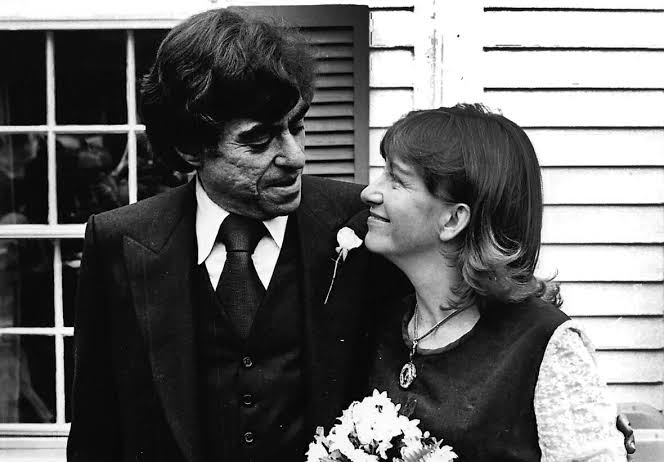
But An Unfinished Love Story is one of Mrs. Goodwin's most personal. Before her husband passed, they were determined to work their way through the more than three-hundred boxes of letters, diaries, memos, reports, and other documents that Mr. Goodwin saved from his career. These were memos written directly to the men he served when he served them, sitting undisturbed in bankers' boxes for more than fifty years. After he died, Mrs. Goodwin decided to finish the project—and this book was the result. It is part biography of Mr. and Mrs. Goodwin (with revealing behind-the-scenes accounts of JFK, LBJ, and RFK) and part history of the 1960s.
Mr. Goodwin wanted to start the project because, a few days after he turned eighty, he said, "I'm an old guy after all. If I have any wisdom to dispense, I'd better start dispensing." Mrs. Goodwin describes the endeavor as "their last great adventure."
Doris Kearns Goodwin recounted that her love of libraries began when she was in middle school and would walk there to get books for her mom who had rheumatic fever. "Through books she could travel to places she could never go. And what a joy it was for me to turn left into the adult room instead of right into the children's room."
I loved this passage, because, same: "During any free time he was able to muster, Dick retreated to the base library where he found his own serviceable nook to smoke a cigar, relax, read, and study. He devoured one book after another, covering a broad range of subjects: poetry, history, science, cybernetics, fiction, drama, mathematics, philosophy, psychology. It was a habit that would mark every day of our lives together, for whenever and wherever Dick settled, he would soon enough be nestled in piles of books, magazines, newspapers, and catalogues." A note from a journal follows: "I also have begun one of those projects which one only dares attempt in the army. And that is reading Gibbon's Decline and Fall. I have read 50 pages and have only about 2500 to go. But then I have at least 17 more months to do it."
It's fun to read the letters Mr. Goodwin wrote during law school. "This election opens all doors to me," he wrote of becoming President of the Harvard Law Review. "Next year, I can work for any law firm in the country . . or I can clerk for a Justice of the Supreme Court . . . And so my problem, which would not seem burdensome to some but is to me, is to make the right choice." (Yes, how burdensome that must have been.) And while he summered at Covington and Burling, "in which Dean Acheson is a senior partner," he never intended to be a "company man." "What I didn't want had become clearer to me than what I did want," he said.
In November of 1957, he wrote in a letter: "The elfin good fortune which seems to dog the path of my own career continues. I have been selected as a law clerk to Justice Frankfurter. There is no doubt that Frankfurter has the finest mind on the bench. He is also a warm man of wide culture and interests. He is known for taking a strong personal interest in his clerks and always discusses his opinions and ideas with them." And when Mr. Goodwin told the Justice that he was ready to start right after graduation, he was met with Justice Frankfurter's oft-cited line about the need to relax: "Young man, there's something I want you to remember for the rest of your career, the laws of physiology are inexorable."
Mr. Goodwin also recounted other advice from Justice Frankfurter. "Our job is to enforce the law, including the Constitution. We have nothing to do with your abstract notions of justice or liberty. Only with what the law provides. Trample the law for your own ends, Dick, and the time will come when you'll be trampled under someone else's ends." (See also Saint Thomas More's speech in A Man for All Seasons.):
William Roper: "So, now you give the Devil the benefit of law!"
Sir Thomas More: "Yes! What would you do? Cut a great road through the law to get after the Devil?"
William Roper: "Yes, I'd cut down every law in England to do that!"
Sir Thomas More: "Oh? And when the last law was down, and the Devil turned 'round on you, where would you hide, Roper, the laws all being flat? This country is planted thick with laws, from coast to coast, Man's laws, not God's! And if you cut them down, and you're just the man to do it, do you really think you could stand upright in the winds that would blow then? Yes, I'd give the Devil benefit of law, for my own safety's sake!"
Clerking for Justice Frankfurter—at that time of the Supreme Court's history—must have been something special. Mrs. Goodwin writes: "Dick was spellbound by anecdotes about the great men the Justice had known: Franklin Roosevelt, Oliver Wendell Holmes, Louis Brandeis. He freely discussed a wide range of subjects, from the latest news stories to the comparative merits of two English chancellors in the eighteenth century, to the personalities of his fellow Justices. Chief Justice Earl Warren, despite his beaming smile and warm handshake, struck Frankfurter as cold and distant; Justice John Marshall Harlan, one of the best men on the bench in his view, he saw as a majestic figure of sound and independent views; Justice Hugo Black, he considered the formidable intellectual leader of the liberal wing."
Mr. Goodwin was eventually recruited by Theodore Sorensen as a speech writer for John F. Kennedy. Sorensen's initial call to Mr. Goodwin came with strict instructions on how to craft a Kennedy speech: "It was to be made of three 'interchangeable parts' that could be snapped together as needed, like some version of Legos: first a tribute to the grandeur of the Democratic party; second, a brief exploration of the 'soup du jour'—foreign policy, arms control, health care—and third, an invocation of American greatness and our responsibility to make a great country even greater."
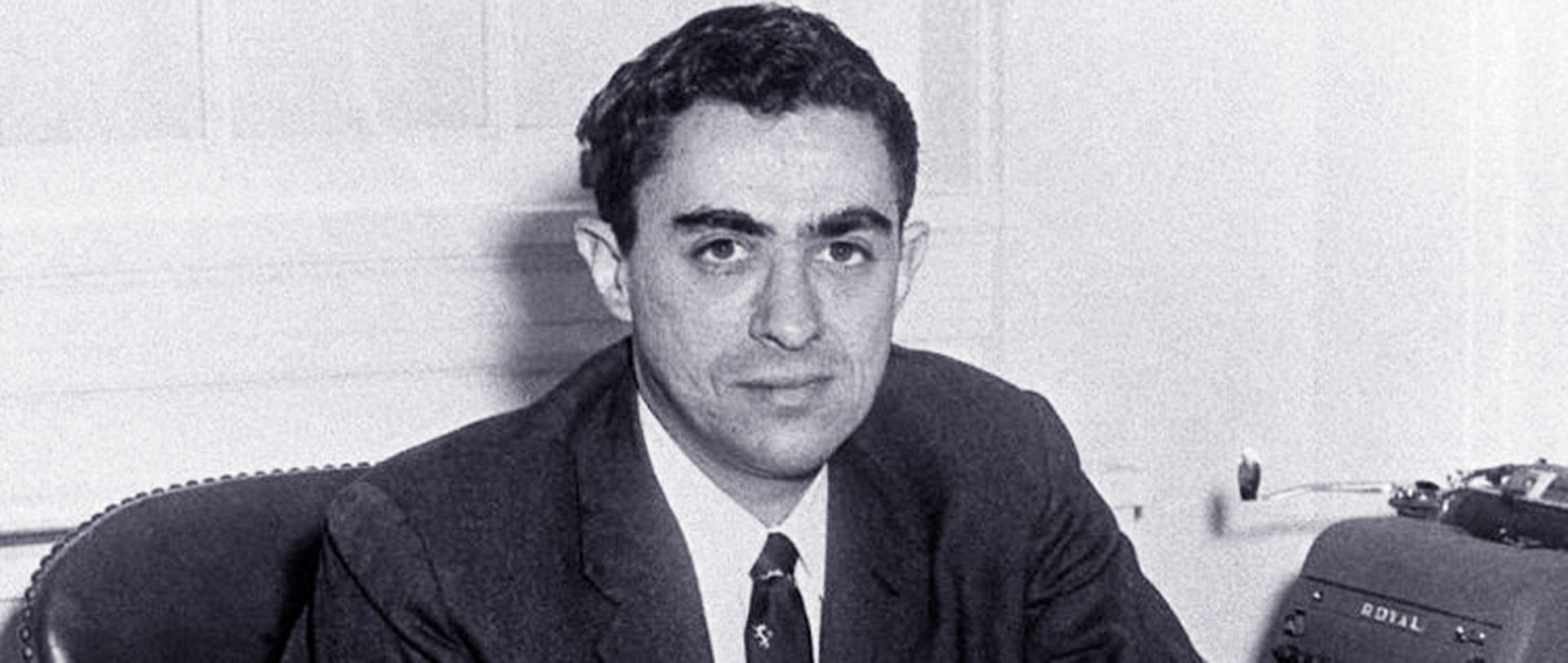
It's interesting that Mr. Goodwin spent so much time with John F. Kennedy and Mrs. Goodwin with Lyndon Johnson, because the two gentlemen could not have been more different. (As explored so brilliantly by Robert Caro in The Passage of Power. When will number five come?) But something I admire about Lyndon Johnson is that he had "an uncanny ability to turn a sow's ear into a silk purse." Mrs. Goodwin explains that "as party whip, minority leader, and majority leader, he had taken positions with small bases of power and vastly magnified and multiplied their functions." That reminded me of the quote from the Greek general Epaminondas who reworked the city's sewers: it's not the office that makes the man but the man that makes the office. I wrote that line again later in the book when Mrs. Goodwin asked why Mr. Goodwin wanted to move from the Peace Corps to the Arts Council, and he replied, "A job is what you can make of it." Mrs. Goodwin writes: "Long ago I had heard nearly identical words when Lyndon Johnson described how he could take a strategically placed small job—like messenger to a college president or secretary to a Congressman—and build them into something exponentially greater." Plus, Mr. Goodwin wanted to be back in the White House. It's not about what you do, it's about who you work for.
Kennedy, of course, had wit. After he saw something on a speech that he didn't like, he asked Sorensen and Mr. Goodwin, "Who the hell wrote that?" "I didn't," Sorensen replied. Because Mr. Goodwin "never had less desire to take credit for something he had written than at that moment," he stayed quiet. "Well, then," Kennedy said, "I guess no one wrote it."
After the first Kennedy-Nixon debate wherein Kennedy's suave oozed through the tubes, Kennedy and the gang relaxed aboard their private plane; Kennedy enjoying tomato soup and a beer. "To Dick, it all seemed too muted. Unable to retain his enthusiasm, he exclaimed, 'We've got it won now! Not just the debate but the election!' Kennedy smiled, finished his beer, and said, 'Next week, Cold War and foreign policy. Better get some sleep and get ready.' Dick told me he learned something important that night. Kennedy was a veteran sailor, a professional. Regardless of circumstances, he kept steady and stable, on an even keel." There is a good lesson there: do the work, and then move along. Kennedy emphasized the same lesson later, when, before he won the election, someone asked if he was serious about the Peace Corps. "Until Tuesday [Election Day], we'll worry about this nation, after Tuesday, the world." Later, Mrs. Goodwin writes: "One of the most beguiling aspects of Kennedy's temperament, Dick told me, was his refusal to be swept away by accolades when things went well, and his ability to maintain his balance and wit when things fell apart."
When Mrs. Goodwin complained that neither candidate had a reflective moment on television during the debates, Mr. Goodwin explained that that was the whole point. "A TV debate is not exactly a format for levity, complexity, or reflection. Time is short, stakes are enormous. A single, serious mistake could prove fatal to months of campaigning. Style, of necessity, towers over substance." Your message must match the medium.
Jackie Kennedy sent Richard Goodwin a file with "JFK, Inauguration, 1961" written on it. Inside were tickets to the inauguration and scraps of speeches. Jackie Kennedy's note said "For Dick Goodwin who was there—as he was always—for all the things that mattered most to President Kennedy and me." It contained a draft of a speech that Kennedy gave in Alaska at the start of the campaign that would eventually become the famous "ask not" line. The first use of a similar phrase Kennedy made at the nominating convention where he said "It sums up not what I intend to offer the American people, but what I intend to ask of them." Then, at the speech in Alaska, the line was: "This is the call of the New Frontier. It is not what I promise I will do; it is what I ask you to join in me doing."
Mr. Goodwin was upset after he was transferred to the State Department. "It hurt," he told his wife. "And of course," he continued, "there would no longer be the informal contact with the president, the sort of chance meetings that had led to conversations and assignments. Missing was the tonic of proximity to power." I wrote next to this in the book: "Lord Halifax to America" (referencing Winston Churchill's banishment of Lord Halifax across the pond so he would stop pestering him).
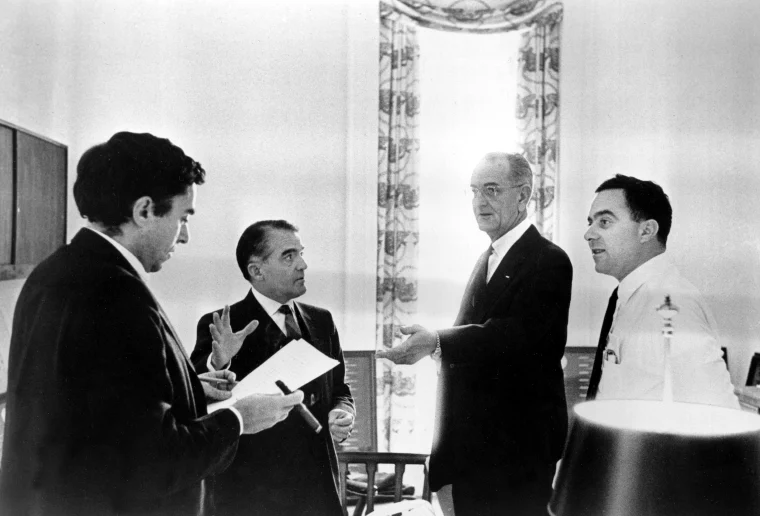
The passing of the Civil Rights Bill of 1964 was a watershed moment in American history. Kennedy dreamed it up, but Johnson executed on it. Likely, JFK would not have been able to break the filibuster because that was only something a true master of the Senate could do—and LBJ was such a master. But the Bill wouldn't have been what LBJ dreamed up.
LBJ on Congress:
There is but one way for a President to deal with the Congress, and that is continuously, incessantly, and without interruption. If it's really going to work, the relationship between the President and the Congress has got to be almost incestuous. He's got to know them even better than they know themselves. And then, on the basis of this knowledge, he's got to build a system that stretches from the cradle to the grave, from the moment a bill is introduced to the moment it is officially enrolled as law of the land.
A measure must be sent to the Hill at exactly the right moment, and that moment depends on three things: first, on momentum; second, on the availability of sponsors in the right place at the right time; and third, on the opportunities for neutralizing the opposition. Timing is essential.
Mrs. Goodwin on her husband's speech writing talents:
He knew the cadences of [LBJ's] speech. The speechwriter's job, Dick explained, was to clarify, heighten, and polish the speaker's convictions in the speaker's own language and natural rhythms. If the words did not sound authentic to the speaker, the emotional current of the speech would not hit home.
I knew that Dick often searched for an arresting short sentence to begin every speech or article he wrote.
"There is a tide in the affairs of men, which, taken at the flood leads on to fortune. Omitted, all voyage of their life is bound in the shallows and in miseries."
A poem from Aeschylus: "In our sleep, pain which cannot forget falls drop by drop upon the heart until, in our own despair, against our will, comes wisdom, through the awful grace of God."
Towards the end of their project, Mr. Goodwin's cancer became more and more aggressive. He couldn't smoke, drink, or enjoy his good food—but he could still read. But eventually that became too hard for him:
As Dick increasingly found it difficult to read, he would hand me a book or article and ask me to read it aloud to him . . . We had lived surrounded by books all our married lives. They were our element. We had written them, read for pleasure, amassed mini-libraries for particular projects, collected them, organized them into ever-shifting categories, and in the end, dwelled inside what we joyfully called our house of books.
One afternoon, Dick asked me to slowly recite one of his favorite poems, Wordsworth's "Intimations of Immortality." When I had nearly finished, he was breathing very deeply, and I thought for certain he had fallen asleep. I went on reading until the end. When I finished, he turned towards me, and from memory repeated:
*Though nothing can bring back the hour Of splendor in the grass, or glory in the flower We will grieve not, rather find Strength in what remains behind*